News
The first ACL production modules for Qassim Farm have left Jiangsu and are on their way to Saudi Arabia. The shipment consists of three ACL growing modules and three support containers, packed and tested at the factory before departure.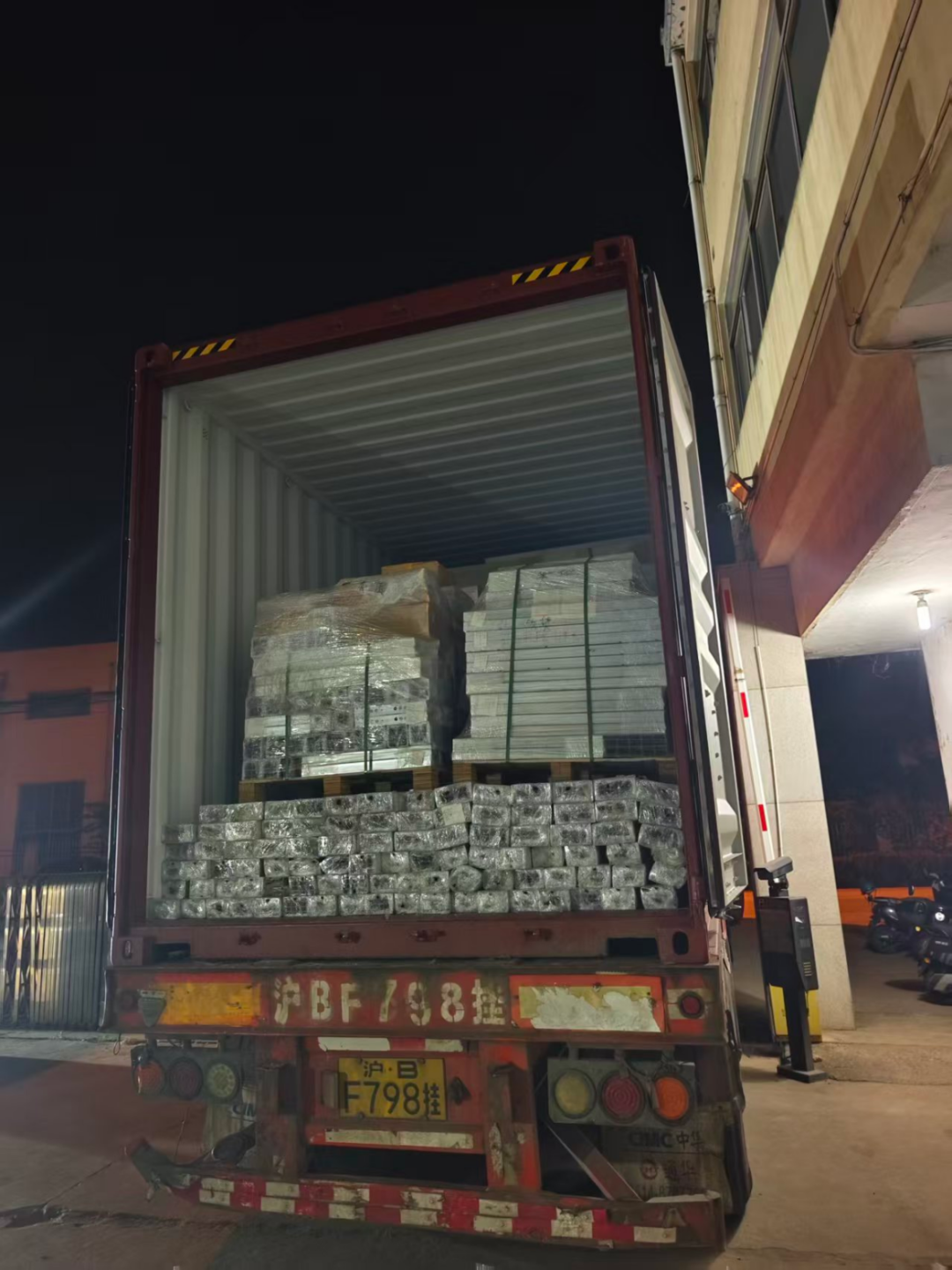
The route is a working example of the logistics challenge behind a desert farm. The containers move by road to the port, then by sea through Singapore, India, the UAE and Egypt before entering Saudi Arabia. From Jeddah, a feeder service across the Red Sea connects to the project corridor, followed by customs clearance and road transport to Qassim. The first units were unloaded on site on 14 September.
Each growing module is a complete production unit, not a kit of loose parts. The modules carry rail-mounted growing channels, the transplanting interface, nutrient delivery, climate equipment and the local control panel. Support containers carry the nursery, fertigation and electrical equipment needed to start the line.
Factory pre-assembly matters in a remote location. Interfaces are checked before shipment, so site work is mainly positioning, connection and commissioning rather than fabrication. That shortens the critical path and reduces the number of trades working at height or in confined spaces.
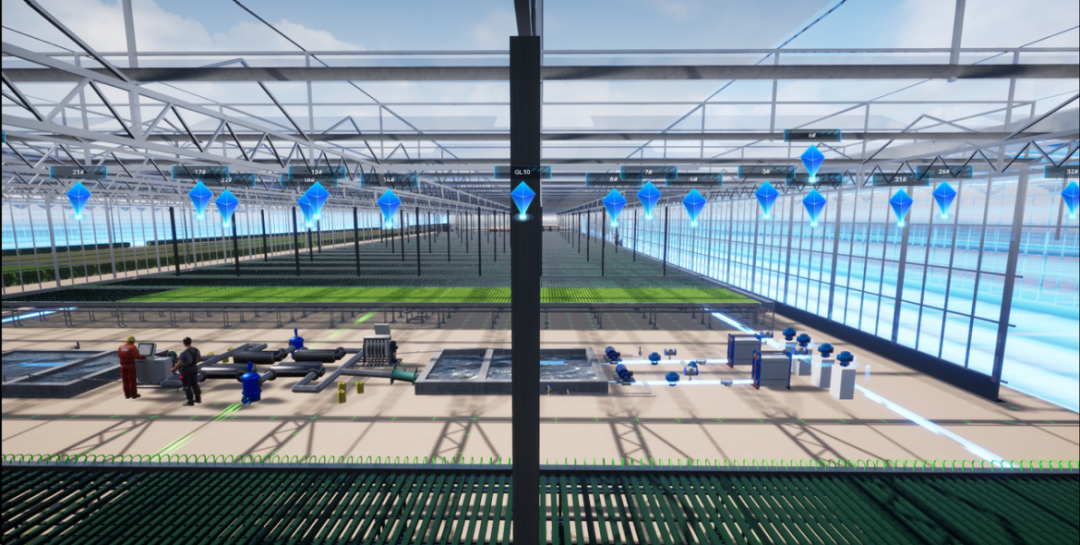
The ACL line is one layer of a larger operating system. The first layer is the physical line: channels, robots and fertigation. The second is the digital twin, which maps the line, crop status and equipment state into one model. The third is automated climate and energy control, which adjusts the growing environment around the crop rather than around a fixed setpoint.
At Qassim, these layers support an unmanned greenhouse model; at Muzahmiyah, the same architecture is applied at a larger farm scale. The design target is an indoor range of 20–25 °C when outside air exceeds 45 °C, with water savings of up to 75% through closed-loop irrigation and recovery.
The site team is preparing foundations, power and water connections while the containers are in transit. Installation will follow the module sequence, with commissioning and operator training completed before the first crop cycle. The line is expected to move from mechanical completion to production in a controlled, step-by-step handover.
