An integrated hydroponic production system combining automated seeding, robotic transplanting, mobile growing channels, precision fertigation and digital management for efficient, scalable leafy-green cultivation.
SYSTEM OVERVIEW
The iHavos Automated Leafy Greens Production System is an integrated hydroponic cultivation solution designed to transform conventional greenhouse growing into a more automated, efficient and standardized production process.
At the heart of the system is a mobile growing-channel architecture that combines NFT cultivation with automated crop handling and optimized growing-space utilization.
Instead of relying on fixed growing benches and repeated manual movement between production stages, the system organizes cultivation around a coordinated sequence of nursery preparation, robotic transplanting, crop growth, harvesting and equipment cleaning.
The growing system works together with precision fertigation, environmental control and digital farm management to support consistent production quality and efficient resource utilization.
Designed for commercial greenhouse operations and adaptable to selected indoor growing environments, the system can be configured according to production capacity, crop varieties, local climate and operational requirements.
Built for Productivity. Designed for Scalability.
PROVEN OPERATING PERFORMANCE
iHavos combines automation engineering with practical cultivation experience, including the operation of automated leafy-green production systems in China and Saudi Arabia.
Our operating experience demonstrates the potential of integrated automation to improve production efficiency while maintaining stable cultivation under demanding environmental conditions.
Performance figures are based on specific operating configurations and production experience. Actual results depend on crop variety, growing cycle, climate, facility design, operating practices and production conditions. The staffing figure does not necessarily include every administrative, packaging, distribution or external support function.
HOW THE SYSTEM WORKS
The system connects the major stages of leafy-green production through coordinated machinery, cultivation equipment and control systems.
Precision seeding equipment prepares seedlings for controlled nursery cultivation.
Seedling production is managed according to crop variety, germination requirements and planned transplanting schedules.
The nursery system supports consistent seedling quality and coordinated production planning.
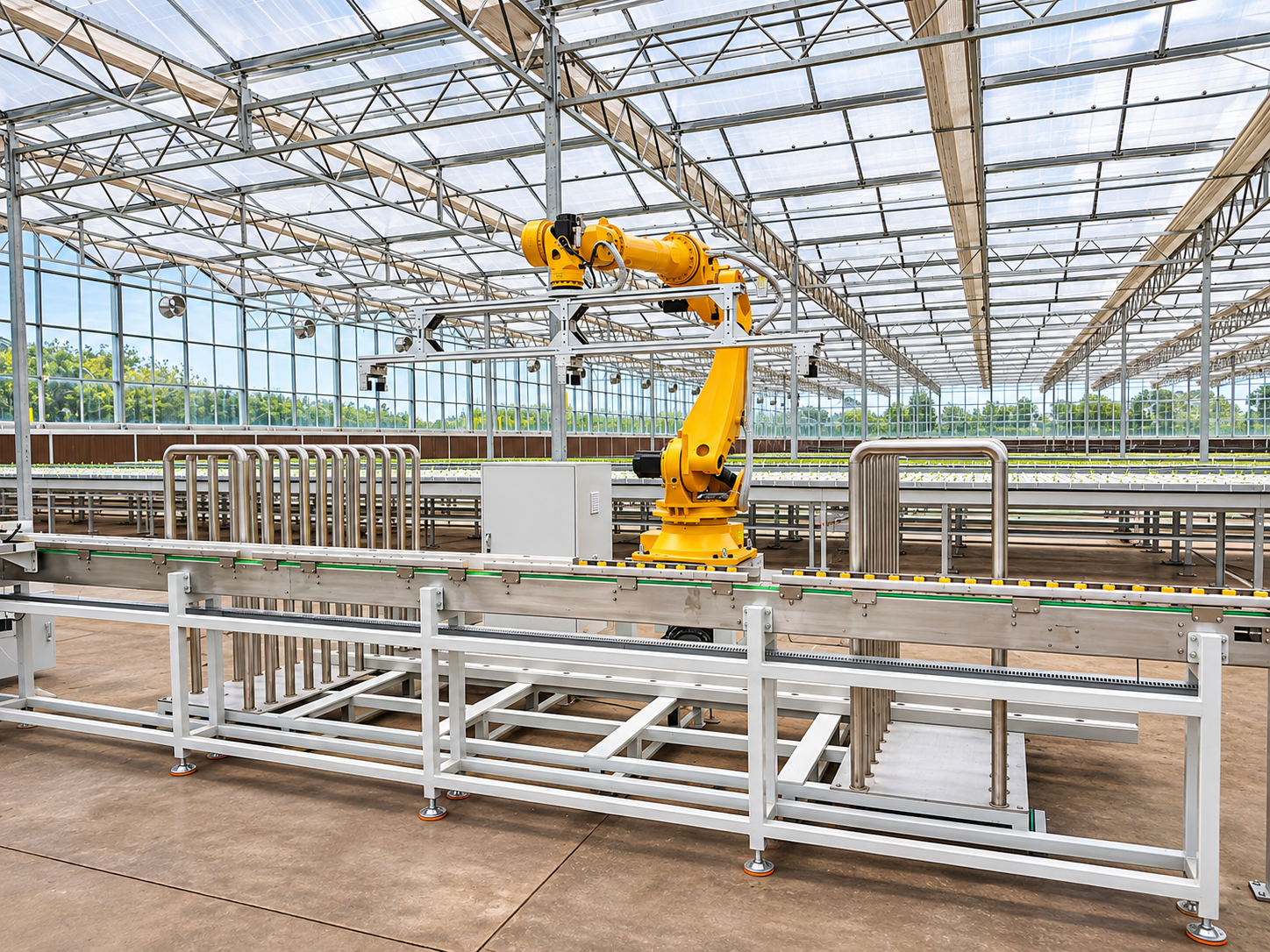
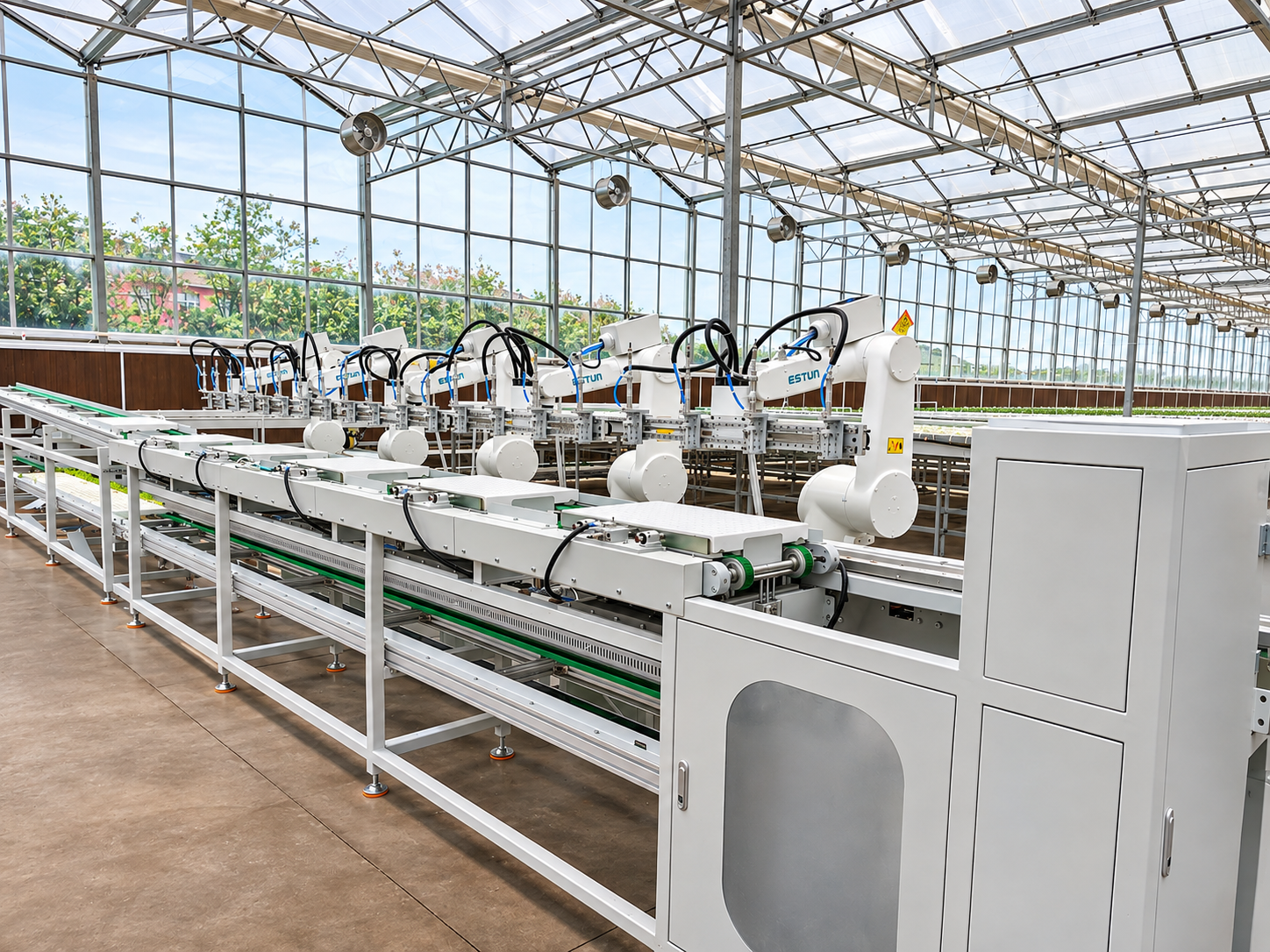
Automated transplanting equipment transfers seedlings from nursery trays into specially designed growing cups and cultivation channels.
Robotic handling reduces repetitive manual work and supports standardized planting operations.
The system has demonstrated a transplanting throughput of approximately 800 plants per hour, with opportunities for further engineering optimization.
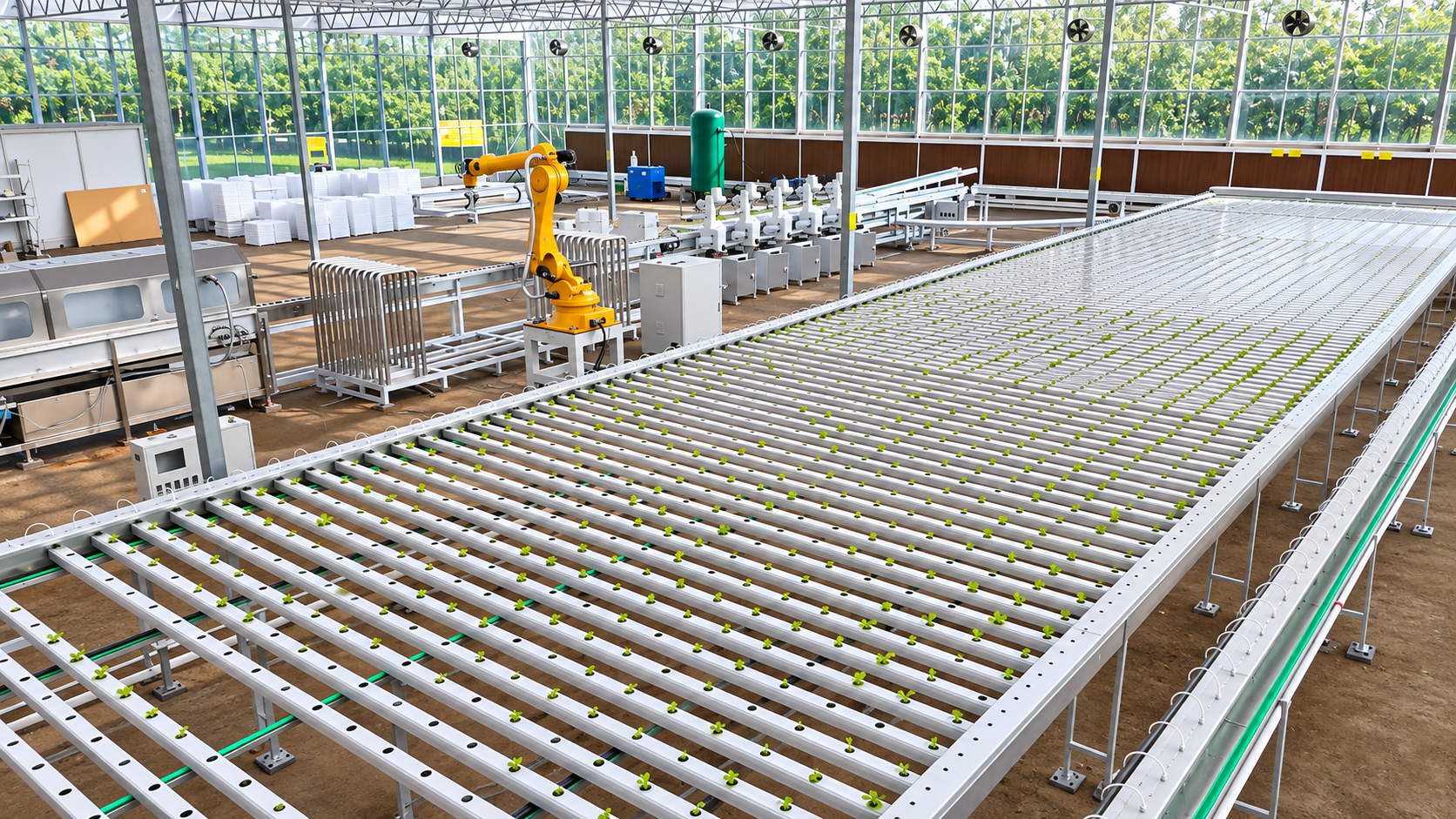
Seedlings enter an NFT-based cultivation system featuring movable growing channels and optimized plant spacing.
The arrangement supports efficient utilization of the growing area while providing access for maintenance and harvesting operations.
Nutrient solution is circulated through the cultivation channels, with EC, pH and other relevant parameters monitored and managed according to crop requirements.
At maturity, crops are transferred to designated harvesting positions or work areas.
Harvesting procedures can be configured according to the crop variety, product specification, labor strategy and selected automation equipment.
The system supports coordinated harvesting operations and downstream handling, with additional mechanization options evaluated according to project requirements.
After harvesting, cultivation channels and customized growing cups can be transferred to automated cleaning equipment.
The cleaning process helps prepare reusable cultivation components for subsequent production cycles, supporting system hygiene and reducing repetitive maintenance work.
Sensors, equipment controls and digital management applications connect the cultivation process with environmental and operational data.
Operators can monitor key production conditions, equipment status and system performance to support more consistent daily operations and informed management decisions.
CORE TECHNOLOGIES
Unlike conventional fixed-channel cultivation layouts, movable growing channels allow the production area to be organized around crop growth, equipment movement and operational access.
This approach can reduce the area permanently allocated to access aisles and improve the utilization of available growing space.
The NFT system supplies nutrient solution directly to the root zone through a shallow circulating flow.
Integrated monitoring and nutrient management support precise control of water quality, fertilizer concentration and growing conditions.
Robotic transplanting, customized growing cups and coordinated mechanical systems reduce repetitive manual handling and support more standardized production processes.
Fertigation equipment, circulation systems, monitoring sensors and appropriate treatment processes work together to manage water and nutrient delivery.
System configuration can include nutrient recovery, filtration, disinfection and reuse where technically suitable.
The growing system can operate alongside greenhouse climate-control equipment, including ventilation, evaporative cooling, shading, heating and other technologies selected for local conditions.
Root-zone temperature management can also be incorporated where required.
Equipment data, environmental monitoring and production information can be connected to digital management platforms.
Digital twins and advanced analytical applications may be incorporated according to the project's digital infrastructure and operating objectives.
COMMERCIAL ADVANTAGES
Mobile cultivation channels help optimize production layouts and reduce the need for permanently fixed access aisles.
Automated seeding, transplanting and equipment cleaning reduce manual intervention in selected production stages.
Coordinated nursery, transplanting and cultivation schedules support regular crop rotation and planned harvesting.
Recirculating hydroponic cultivation and precision fertigation support resource-efficient production.
Controlled growing conditions and standardized operating procedures help reduce production variability.
Modular system design allows cultivation capacity and supporting automation to be planned according to the required production scale.
MODULAR SYSTEM DESIGN
The iHavos Automated Leafy Greens Production System is designed with modular engineering principles, allowing the cultivation system and supporting equipment to be configured for different project sizes.
Standardized cultivation modules incorporate mobile growing channels, supporting structures, drive mechanisms and associated equipment interfaces.
Seeding, transplanting, cleaning, fertigation, crop handling and other functional systems can be configured according to production requirements.
Multiple cultivation modules and supporting systems can be coordinated within a greenhouse or other suitable growing facility, creating an integrated production operation.
This architecture supports phased capacity expansion, equipment maintenance and future system upgrades, subject to the interfaces and infrastructure established during initial project design.
PROJECT CONFIGURATION
Every commercial growing project has different requirements. iHavos configures its automated leafy-green systems around the technical and economic conditions of each project.
System size, cultivation area, number of growing modules and planned expansion phases are determined by target production volume.
Crop varieties, plant spacing, growth cycles, harvesting methods and market specifications influence cultivation-system design.
The system can be configured for newly built greenhouses, suitable existing facilities or selected indoor growing environments.
Automation levels are selected according to labor availability, operating costs, production volume and investment objectives.
Source-water quality, treatment requirements, energy supply, environmental control and operating costs are considered during engineering design.
Monitoring, equipment connectivity, production records and advanced digital functions can be incorporated according to the client's operational needs.
ENGINEERING & DELIVERY
iHavos provides integrated engineering and technical services covering the development, manufacturing, installation and operation of automated leafy-green production systems.
Evaluation of crop varieties, production targets, site conditions, water and energy resources, labor availability and commercial requirements.
Development of the cultivation layout, automation configuration, fertigation interfaces, equipment specifications and implementation plan.
Manufacturing, assembly and preparation of key cultivation and automation components, with testing and quality-control procedures as appropriate.
On-site installation, mechanical and electrical integration, control-system testing and equipment commissioning.
Operational testing and adjustment of cultivation processes, transplanting performance, fertigation and equipment coordination.
Operator training, maintenance guidance, production procedures, technical support and continuous improvement based on operational feedback.
APPLICATIONS
The system is suitable for projects seeking more consistent, efficient and scalable leafy-green cultivation.
Typical applications include:
The cultivation system can be adapted for selected lettuce varieties and other compatible leafy crops, subject to crop-specific testing and engineering requirements.
CALL TO ACTION
Whether you are developing a new commercial greenhouse or upgrading an existing cultivation operation, iHavos can help evaluate the right production capacity, growing system, automation level and investment approach.
Build a More Efficient Growing Operation with iHavos.
