
Build pressure with fresh air
With the vents mostly closed, the fans supply fresh air to the crop zone. Air leaves through controlled outlets and small gaps. The pressure settles where the incoming and outgoing airflow balance.
Smart Greenhouse Systems
A semi-closed greenhouse treats incoming air in a dedicated climate corridor and delivers it directly to the crop zone. Managed airflow gives growers more control over temperature, humidity and ventilation as outdoor conditions change.
The climate corridor, typically located along a gable end, prepares the air before it enters the growing area.
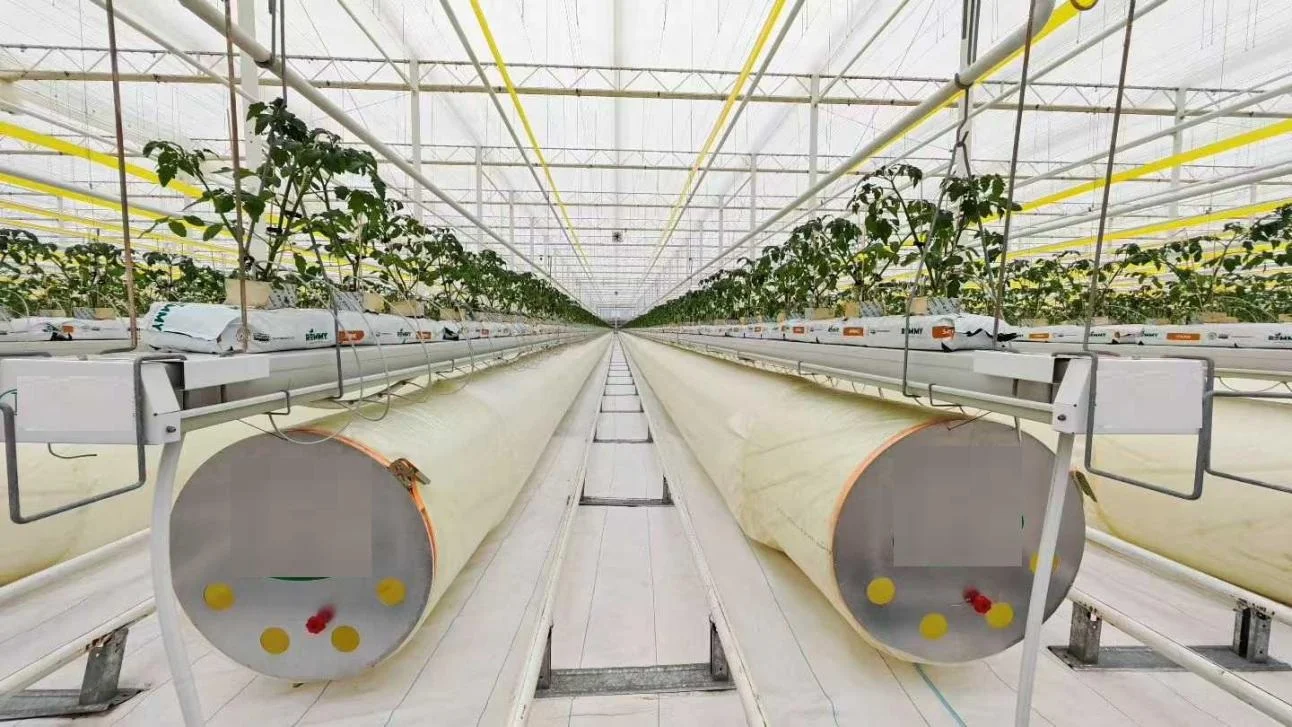
Outdoor air passes through a screened intake. The climate corridor cools, heats or dehumidifies it as needed, with return air recirculated where the system is configured for it.
Variable-speed fans feed perforated ducts beneath the growing rows. The ducts spread supply air along the crop zone to limit local variations in temperature and humidity.
During mechanical operation, the fans maintain slight positive pressure. The climate controller balances mechanical supply with controlled air release. Where recirculation is available, some indoor air can return to the climate corridor for treatment.
Ventilation control
During mechanical ventilation, fans bring in outdoor air through screened intakes. The supply raises the pressure in the crop zone slightly above outdoor pressure, so air tends to flow outward through small gaps. This reduces the chance of insects entering through those gaps.
With the vents mostly closed, the fans supply fresh air to the crop zone. Air leaves through controlled outlets and small gaps. The pressure settles where the incoming and outgoing airflow balance.
A differential-pressure sensor measures the indoor-to-outdoor pressure difference. If pressure falls below the target, the controller can increase fan speed or reduce the relief opening. If pressure rises above the target, it can open the relief vent further or ease fan speed, while maintaining the airflow the crop needs.
Some designs use roof vents for both pressure relief and natural ventilation. In mechanical mode, the controller modulates their opening to release air. In natural ventilation mode, wider openings allow more air exchange and reduce the pressure difference.
Where return air is recirculated, it helps redistribute conditioned air. Fresh-air intake provides the net airflow needed to maintain positive pressure.
Controlled air intake and distribution give growers more options for managing the crop environment.
Crop-level air distribution helps reduce hot spots and pockets of high humidity across the growing area.
Screened intakes and slight positive pressure help limit insect entry through air intakes and gaps in the greenhouse envelope.
When vents remain mostly closed, lower air exchange can help retain supplemental CO₂. Where enrichment is installed, the controller can pause dosing when vents open wider.
The climate corridor takes the lead when outdoor conditions call for active treatment. Evaporative cooling can suit hot, dry air. Mechanical cooling and dehumidification can be specified where humid conditions limit evaporative cooling.
In configurations with operable roof vents, the controller can use natural ventilation when outdoor temperature, humidity, wind and rain conditions allow, reducing the need for active air treatment during those periods.
System photos
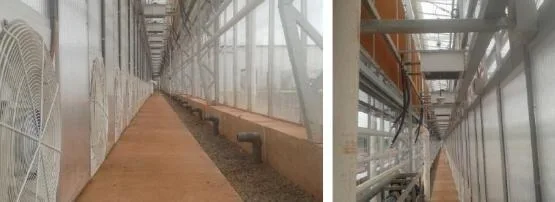
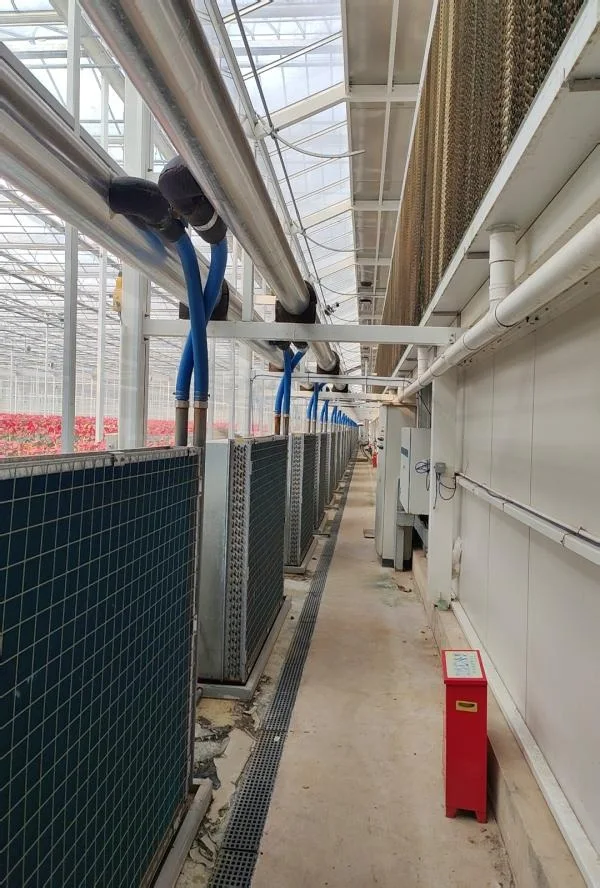
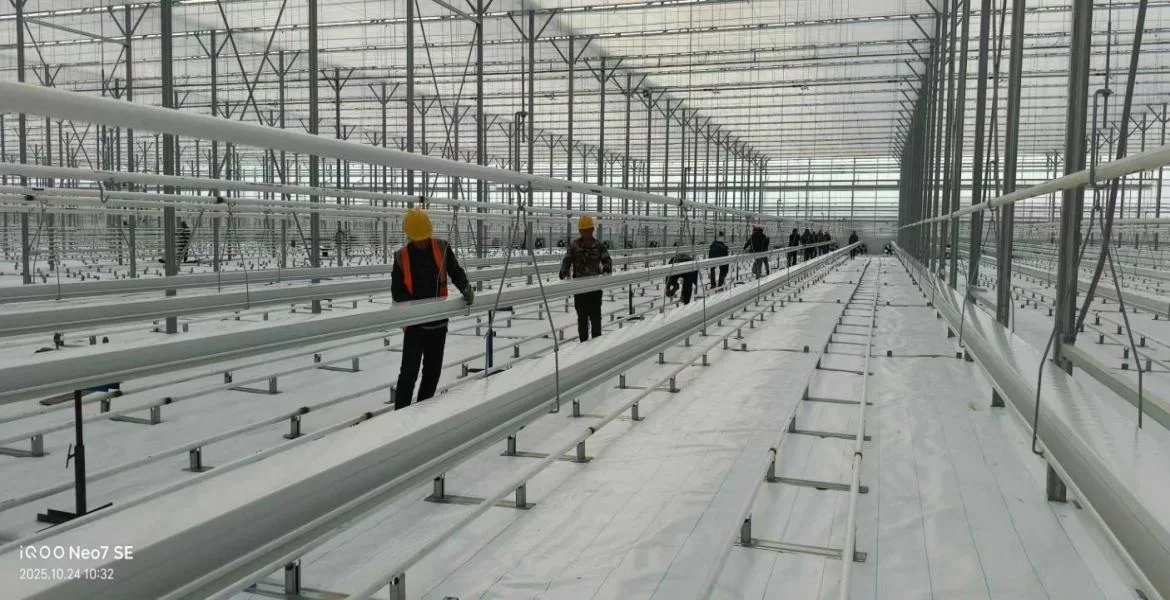
The corridor groups air-treatment equipment along one edge of the greenhouse, where it can be accessed for inspection and servicing. The photos below show examples of corridor layouts and installation.
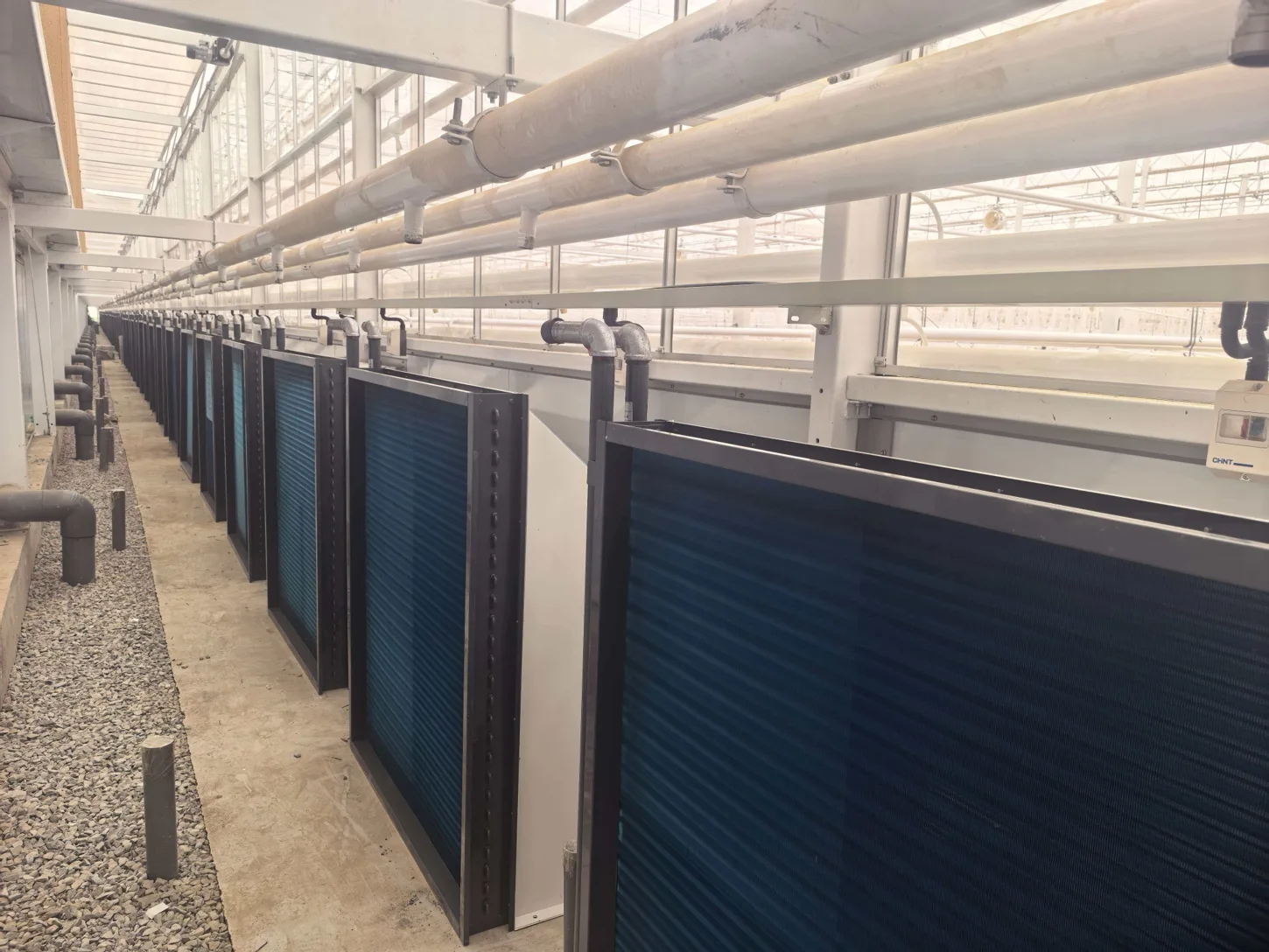
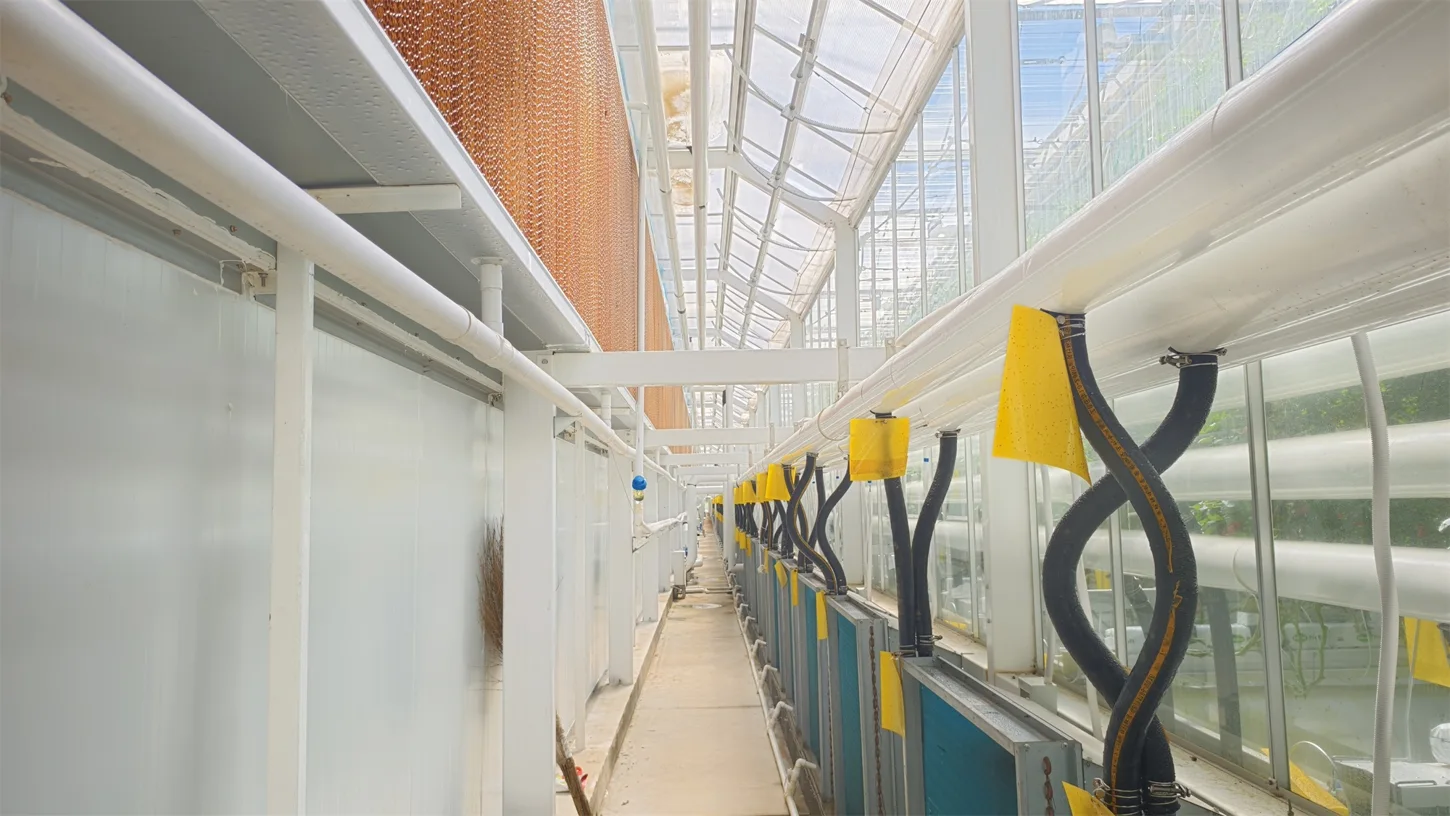
Installing the air-treatment equipment and preparing the growing rows are two stages of fitting out a semi-closed greenhouse.
Semi-closed greenhouses can support high-wire crops such as tomatoes, peppers and cucumbers, as well as seedling propagation and floriculture. The air-treatment and ventilation configuration depends on local weather, crop requirements and available water and energy.